If you are my destiny, then I am happy to be as you see me. Even though I haven’t seen you for two or three days, from the very first time I met you, you never felt like a stranger. Even when I tried to talk to you and get to know you, it felt the same. I realized a long time ago that meetings are not just coincidences. Anyway, I really like the way you carry yourself—it truly suits you.
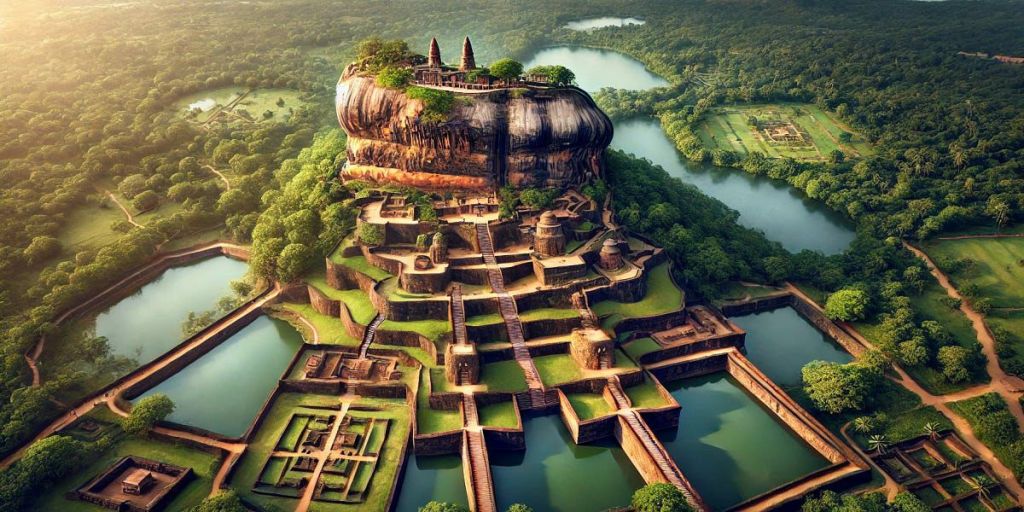
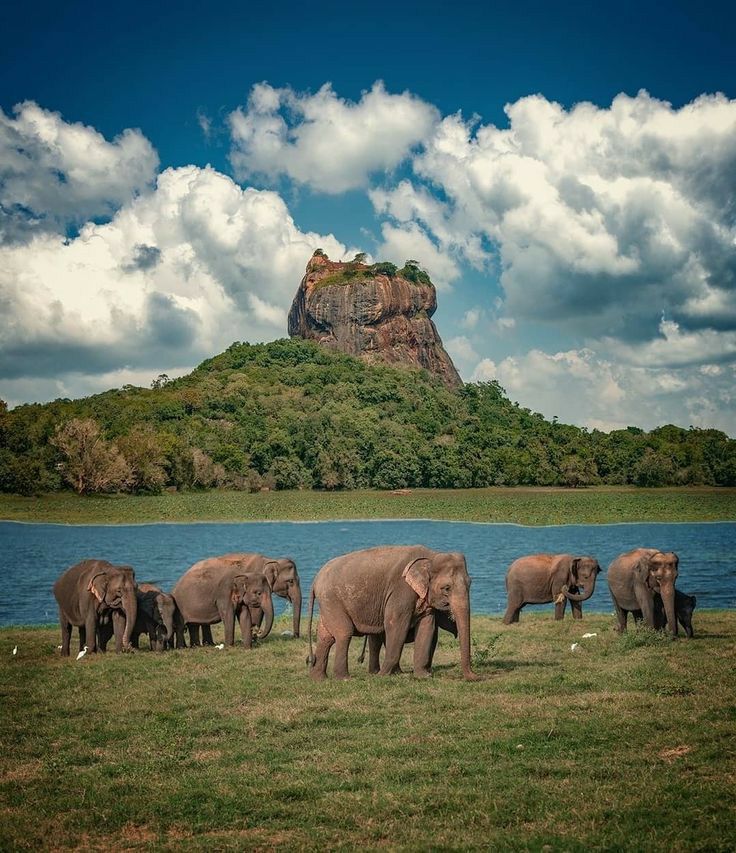
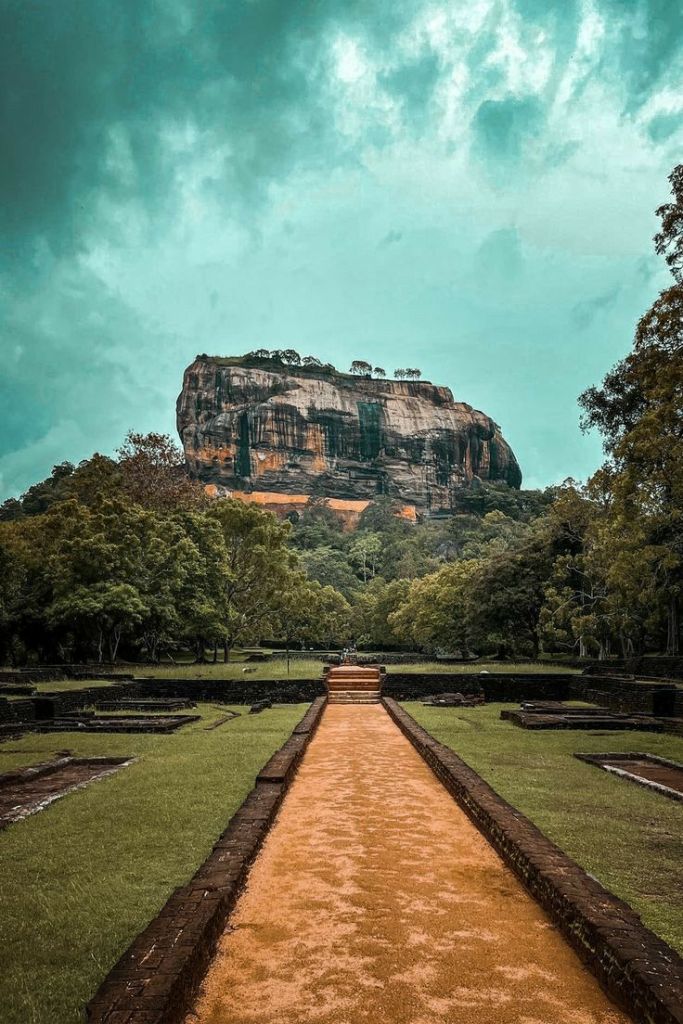
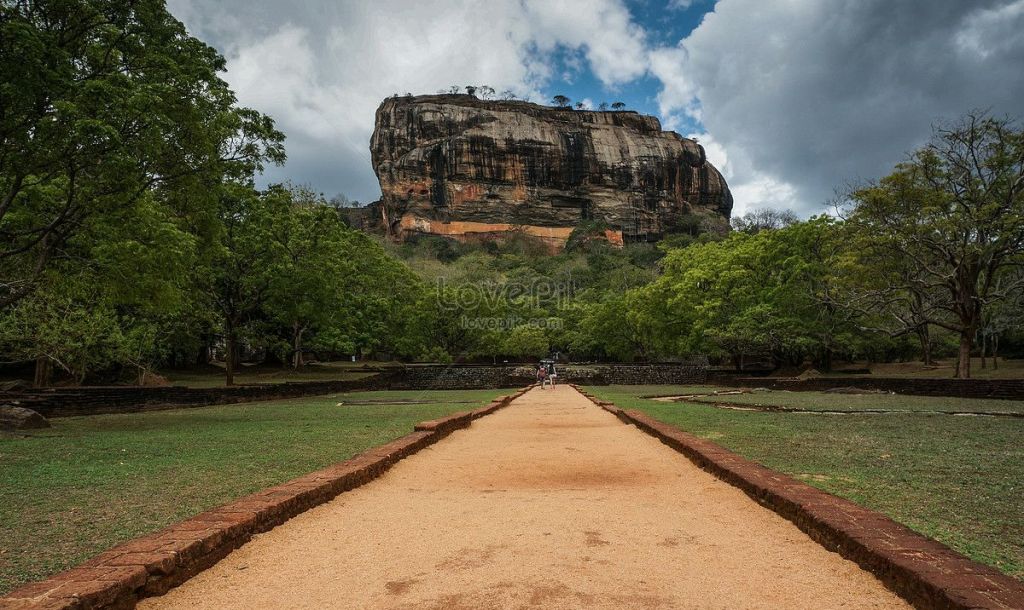
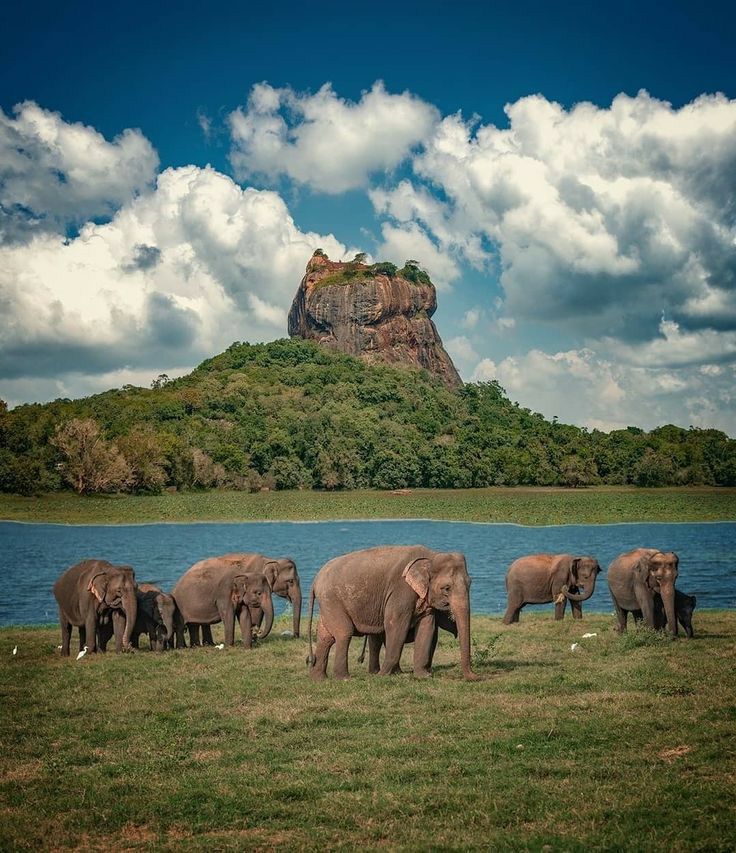
Sigiriya, often referred to as the “Eighth Wonder of the World,” is a UNESCO World Heritage Site located in the Matale District of Sri Lanka. This ancient rock fortress is not only an architectural marvel but also a testament to the rich cultural and historical heritage of the country.
A Brief History
The story of Sigiriya begins in the 5th century CE with King Kashyapa, who is believed to have built the fortress after overthrowing his father, King Dhatusena. Seeking refuge from his half-brother Moggallana, the rightful heir to the throne, Kashyapa transformed the 200-meter-high rock into an impenetrable fortress. However, his reign was short-lived. After a decisive battle, Kashyapa was defeated, and Sigiriya was eventually abandoned and later repurposed as a Buddhist monastery.
Architectural Splendor
The ingenuity of Sigiriya’s design is awe-inspiring. The complex includes:
The Lion Staircase: The name “Sigiriya” translates to “Lion Rock,” and the entrance to the summit is flanked by two massive lion’s paws, remnants of what was once a full lion-shaped gateway.
The Water Gardens: These symmetrically designed gardens feature sophisticated irrigation systems, including fountains that still function during the rainy season.
The Mirror Wall: Once polished to such a reflective shine that the king could see his reflection, this wall now bears ancient graffiti from visitors praising Sigiriya’s beauty.
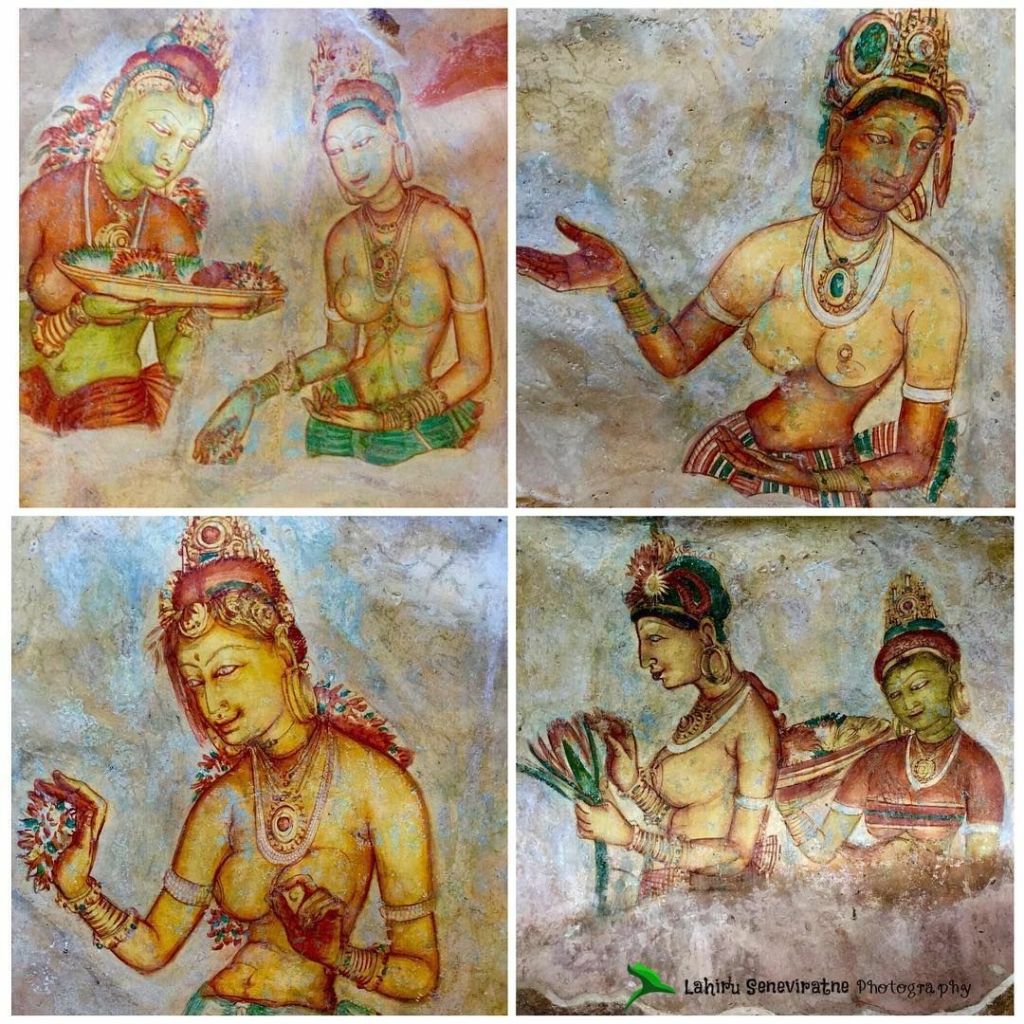
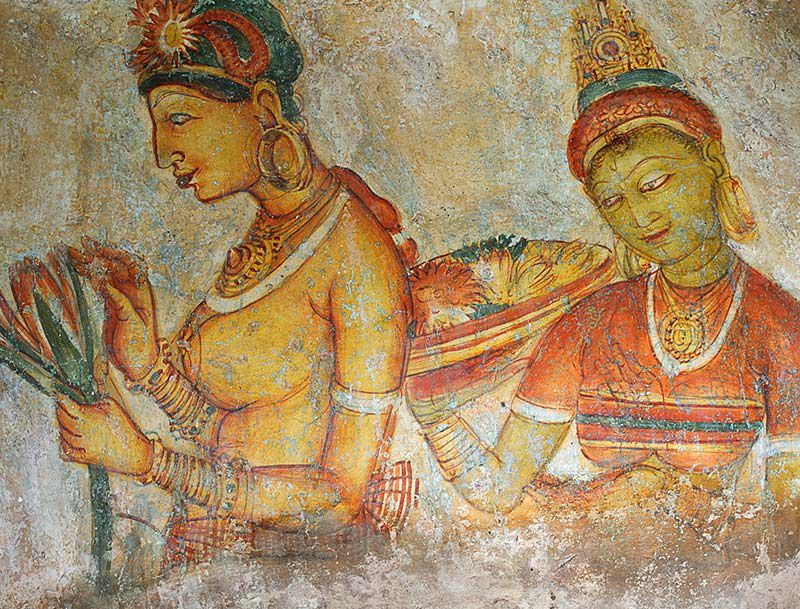
The Frescoes: The western face of the rock is adorned with frescoes of celestial maidens, believed to depict either the king’s consorts or divine beings. These paintings are celebrated for their vibrant colors and intricate details.
The Summit
Sigiri Apsara’s
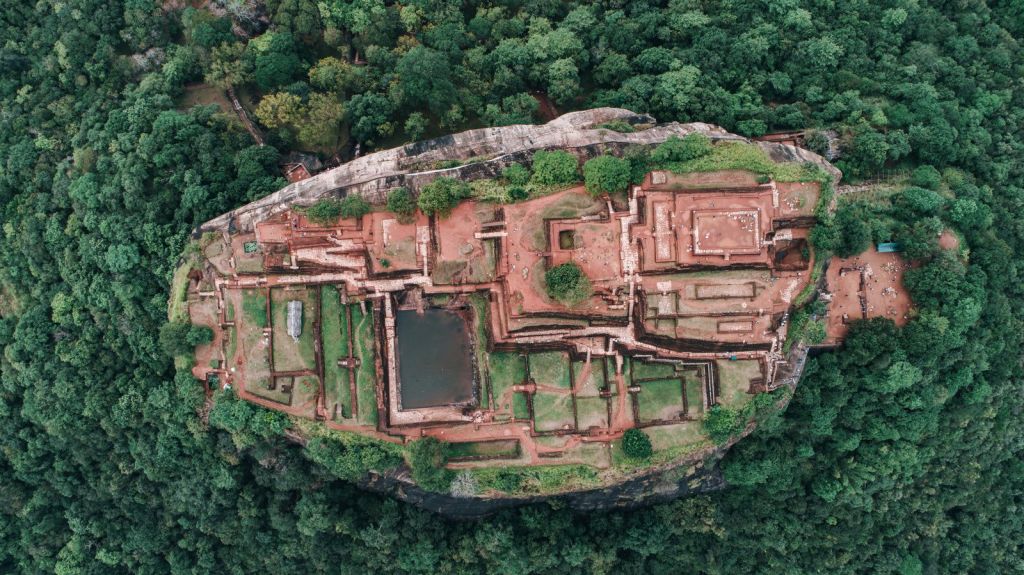
The summit of Sigiriya reveals the ruins of the royal palace, complete with a throne carved out of rock and remnants of cisterns used to collect water. The panoramic views from the top encompass lush forests, distant mountains, and the surrounding plains, making the climb worth every step.
Cultural Significance
Sigiriya is more than a historical site; it is a symbol of Sri Lanka’s resilience and ingenuity. The fortress combines art, architecture, and engineering, showcasing the sophistication of ancient Lankan civilization.
Tips for Visitors
1. Start Early: The climb can be strenuous, especially under the midday sun.
2. Stay Hydrated: Bring water, but ensure it’s in an eco-friendly container to protect the environment.
3. Respect the Site: Sigiriya is a cultural and spiritual landmark—avoid littering or touching the frescoes.
Whether you’re a history enthusiast, an art lover, or an adventurer, Sigiriya offers an unforgettable journey into Sri Lanka’s past. It stands as a reminder of the creativity and ambition of our ancestors, inviting us to marvel at their achievements.
What are your thoughts on Sigiriya? Share them in the comments below!
In a quiet town surrounded by misty mountains, there lived a painter named Elias. Known for his vivid depictions of human emotion, his canvases captured laughter, sorrow, and everything in between. Yet, one emotion eluded him: intimacy.
One evening, at a local gallery opening, Elias met Celeste, a poet who spoke as if her words were woven from silk. She carried herself with a quiet confidence, her every movement deliberate and graceful. They struck up a conversation about their crafts—how poetry painted with words and how art spoke without them.
As the weeks passed, their connection deepened. They shared late-night talks about vulnerability, trust, and the unspoken language of the body. Elias confessed his struggle to capture intimacy in his work, and Celeste offered a challenge: “Let me be your muse. Paint what you feel, not what you see.”
The next evening, she arrived at his studio. The room was dimly lit by a single lamp, casting soft shadows on the walls. Celeste let her dress slip from her shoulders, baring herself not just physically but emotionally. Her vulnerability was palpable, yet she radiated strength.
Elias began to paint, his brushstrokes tentative at first. As the hours passed, his movements grew bolder, inspired by the way Celeste’s form spoke of quiet confidence and trust. The room buzzed with unspoken energy—a conversation between muse and artist, between longing and restraint.
When the painting was complete, Celeste stepped forward to see it. The canvas didn’t show her body as it was but as Elias perceived her: a symphony of light and shadow, curves and edges, openness and mystery.
“It’s beautiful,” she whispered, her voice trembling with emotion.
That night, they shared their first kiss—a culmination of trust, understanding, and mutual vulnerability. For Elias, it wasn’t just a kiss; it was the answer to his artistic struggle. Intimacy wasn’t about physical closeness alone—it was about the courage to be seen and to see in return.
Joyful thoughts have a way of lighting up even the darkest moments. They remind us of the simple wonders of life—a sunrise, laughter with friends, or the quiet peace of a favorite memory. These thoughts don’t demand perfection; they celebrate the beauty in the ordinary.
Cultivating joyful thoughts is like planting seeds in the garden of your mind. The more you nurture them with gratitude and mindfulness, the more they grow, filling your days with warmth and positivity. After all, joy isn’t something we wait for—it’s something we choose to create, moment by moment.
I sit and watch, the world unfolds, No purpose sought, no story told. The breeze hums softly, leaves embrace, In silent rhythm, time leaves no trace.
A bird in flight, a shadow’s dance, The fleeting moments of happenstance. Eyes unchained, no goal to bind, Just the art of seeing with an open mind.
Not every glance must bear a weight, Not every gaze needs tethered fate. In watching still, life’s truths appear, A quiet knowing, sharp and clear.
For beauty hides where reasons fade, In unscripted moments, softly laid. So I’ll keep watching, calm, at ease, For in such watching, the soul finds peace.
“to watch without a recon is to yoursel yourself the gift of this presence. Sinhala meaning”
“Is this a dagger which I see before me, The handle toward my hand? Come, let me clutch thee. I have thee not, and yet I see thee still. Art thou not, fatal vision, sensible To feeling as to sight? or art thou but A dagger of the mind, a false creation, Proceeding from the heat-oppressed brain?”
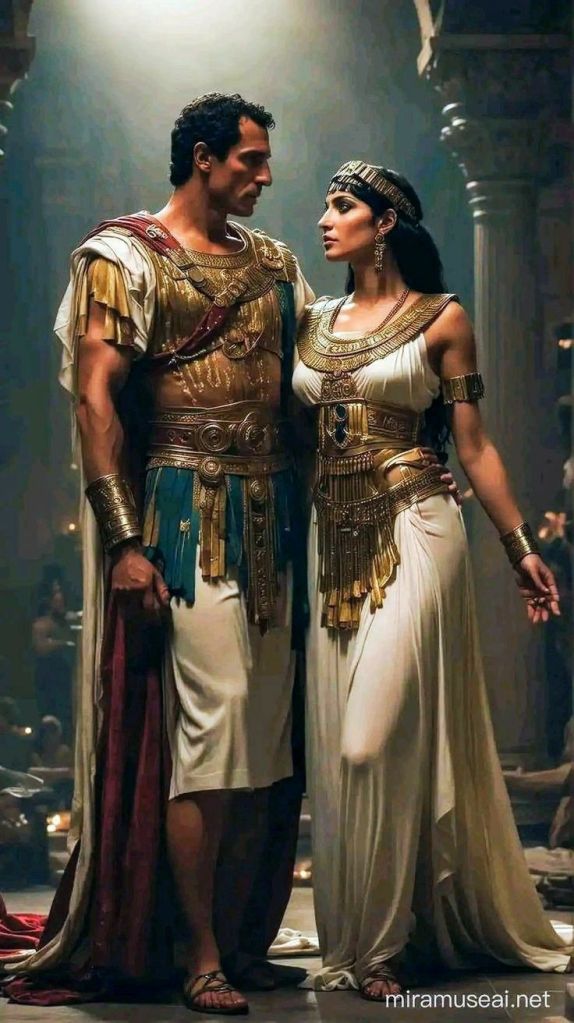
The Heart Of Egypt Meets Rome.A Love That Shaped History.
Mark Anthony & Cleopatra ✨
Cleopatra: I am quickly ill and well, So Antony loves.
Antony: My precious queen, forbear; And give true evidence to his love, which stands An honourable trial.
Cleopatra: So Fulvia told me. I prithee, turn aside and weep for her; Then bid adieu to me, and say the tears Belong to Egypt: good now, play one scene Of excellent dissembling; and let it look Like perfect honour.

















 Fragment Of Me